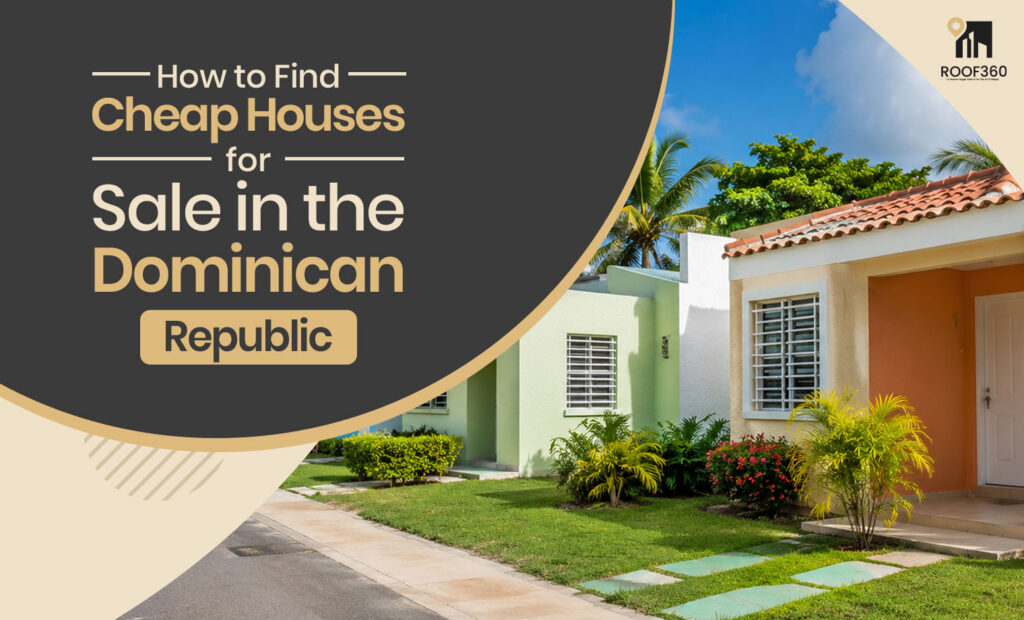
How do you find genuinely affordable houses in the Dominican Republic without buying someone else’s expensive problem? The answer lies in understanding where lower-priced homes are available and what makes them worth buying.
That distinction matters.
Many buyers looking for budget-friendly houses for sale in the Dominican Republic focus only on the listing price. Experienced buyers look at the full cost of ownership, the quality of the title, the area’s growth pattern, and how easy the property may be to rent, resell, or live in.
The Dominican Republic has strong property demand because it serves several buyer groups at once: local families, overseas Dominicans, retirees, lifestyle buyers, and investors.
Tourism fuels demand for homes in coastal and resort destinations. The opportunity is real, but cheaper does not always mean better. The goal is to find a property that is affordable, clear, and financially sensible.
Steps to Find Affordable Houses for Sale in the Dominican Republic
1. Start With a Realistic Definition of “Cheap”
In the Dominican Republic, “cheap” depends heavily on the area. A low-priced home in Santo Domingo Este may not mean the same thing as a low-priced villa near Punta Cana, Las Terrenas, or Cabarete.
Before searching, define your price bracket based on the buyer’s goal:
- Primary home
- Rental investment
- Retirement property
- Fix-and-resell opportunity
- Land plus future construction
- Small family house outside premium zones
The official low-cost housing category gives buyers one useful benchmark. For 2026, the DGII-adjusted maximum value for homes classified as “viviendas de bajo costo” was reported at RD$5,450,851.12, under the rules tied to low-cost housing benefits and transfer-tax relief.
That does not mean every affordable property must fall under this category. It simply gives buyers a reference point for how the government defines lower-cost housing within specific programs.
Inexpensive houses for sale in the Dominican Republic are not always distressed properties. Some are smaller homes, older resale units, properties outside the most searched coastal zones, or homes that need cosmetic upgrades rather than structural repairs.
Find Value Before the Market Notices
Roof360 helps buyers explore Dominican Republic properties visually by area, price, and location. Instead of scrolling through disconnected listings, buyers can compare options on the map and identify where real value is actually sitting.
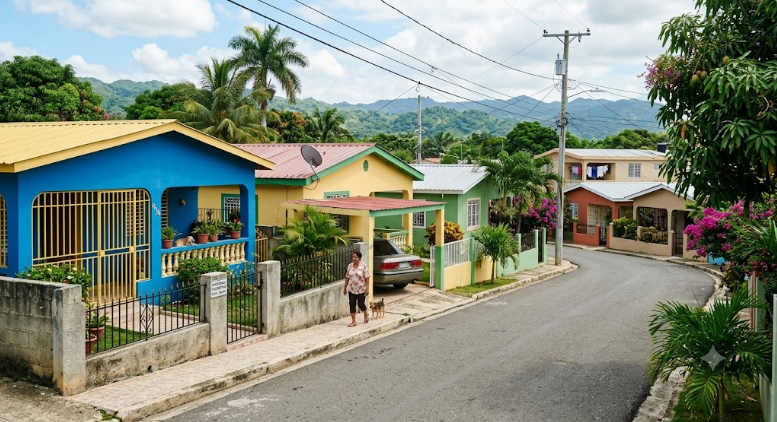
2. Search Outside the Most Obvious Tourist Zones
Most buyers start with Punta Cana, Cap Cana, Santo Domingo, Las Terrenas, or Puerto Plata. These markets have demand, but the most visible areas are rarely where the best entry prices appear.
Better value may be found in:
- Santo Domingo Este and Santo Domingo Norte
- Santiago outskirts
- La Romana residential areas outside luxury resort zones
- San Cristóbal and nearby commuter areas
- Puerto Plata neighborhoods away from the beach strip
- Emerging areas near new roads, schools, supermarkets, or hospitals
This is where many real estate people often say “look outside tourist areas,” but they do not explain what buyers should look for once they do.
A smarter approach is to search for locations with practical demand. Look for access to main roads, grocery stores, employment centers, schools, clinics, and public transport.
A cheaper house in a working residential area may hold stronger long-term value than a prettier property in an isolated location with weak infrastructure.
That is why buyers should compare everyday livability, rental demand, road access, and future growth before deciding on the best places to invest in Dominican Republic property in 2026.
3. Use Map-Based Search Instead of Only Listing Feeds
A standard listing feed shows price, photos, and a short description. A map-based search shows context.
That context matters because a house can look like a bargain until you see where it sits. Is it close to daily services? Is it near a noisy road? Or, is the area walkable? Are nearby properties priced much higher or much lower?
Roof360’s value is strongest here. The platform is built around visual property discovery, helping buyers explore listings directly on a map, compare prices, and connect with owners or agents. Roof360 provides a platform for buyers, owners, and agents to browse, publish, and compare properties across the Dominican Republic.
For perfectly priced houses for sale in the Dominican Republic, this is especially useful. Lower-priced properties require more comparison because the reason behind the price is not always obvious. A map view helps buyers separate a genuine value opportunity from a property that is cheap because the location is weak.
4. Check Whether the Property Qualifies for Housing Support
For Dominican families and qualifying buyers, government-backed housing programs may help reduce the upfront burden.
The Mi Vivienda program is managed by the Ministry of Housing and Buildings. It includes the Bono Inicial Familiar, a financial contribution that helps cover part of the initial payment for a first home.
This family program is designed for Dominican Republic homes for sale. It welcomes stable-income families who may still need support accessing a mortgage or down payment.
This matters because affordability is not only the sales price. It is also the down payment, monthly payment, closing cost, and whether the buyer can access financing.
Buyers should ask:
- Is the home part of a qualified low-cost housing project?
- Does the property qualify for any transfer-tax benefit?
- Is the buyer eligible for support programs?
- Does the bank accept the project or property for financing?
- Are all developer documents complete?
This is one area where cheaper listings need careful attention. A low asking price is helpful, but a property that cannot be financed easily may become expensive in practice.
Compare the Real Cost (Not Just the Price)
Roof360 helps buyers look for homes for sale in the Dominican Republic beyond the headline number by comparing location, listing details, property type, and buyer fit. That gives serious buyers a clearer route to affordable property decisions.
5. Understand Taxes Before Calling a Property “Affordable”
A property can look affordable and still carry costs that change the decision.
The Dominican Republic’s IPI property tax is one important factor for owners. For 2026, DGII states that individual real estate patrimony is taxed when the total taxable property value exceeds RD$10,695,494.00. The tax is paid in two semiannual installments, with deadlines listed by DGII as March 11 and September 11.
For many lower-cost homes, this threshold may mean no annual IPI is due if the buyer’s total taxable property value stays below the exemption amount. Still, buyers should verify their specific case with a qualified professional.
When reviewing houses for sale in the Dominican Republic, ask about:
- Transfer tax
- Legal fees
- Notary and registration costs
- HOA or maintenance fees
- Utilities and service access
- Renovation or repair estimates
- Property tax exposure
- Furniture or appliance inclusion
A cheap home is only truly affordable when the buyer understands the full number.
6. Do Not Let a Low Price Distract From Title Checks
This is where serious buyers protect themselves.
Every affordable property should be checked for title status, ownership history, liens, boundary issues, unpaid taxes, and whether the seller has full authority to sell. This matters even more outside high-end gated communities or formal developer projects.
A safe buying process should include:
- A qualified local real estate attorney
- Title certificate verification
- Survey or boundary review where needed
- Confirmation of seller identity
- Tax and utility clearance
- Written offer terms
- Clear payment schedule
- Proper transfer registration
A low price should never replace proper legal checks. Anyone buying property in the Dominican Republic should verify the title, seller identity, unpaid taxes, boundaries, and transfer process before signing anything.
7. Look for Cosmetic Problems
Some of the best value properties are not beautiful on the first viewing. They may have old paint, outdated tiles, weak staging, poor listing photos, or messy presentation.
Those are fixable.
Be more cautious with:
- Roof damage
- Drainage issues
- Foundation cracks
- Illegal extensions
- Unclear boundaries
- Bad access roads
- Electrical or plumbing failures
- Properties with no clean title
A dated kitchen can be an opportunity. A title problem can become a long and expensive delay.
This is also where property descriptions influence buyer decisions. A weak description may hide a good house, while a polished description may distract from real issues. Buyers should read carefully, compare photos, and request missing details before visiting.
8. Watch Listings That Have Been Online Too Long
Stale listings can sometimes create negotiation room.
A property may sit online because it is overpriced, badly photographed, poorly described, or listed in the wrong category. That does not automatically make it a bad property. It may simply be poorly marketed.
Signs of possible negotiation:
- Listing has been active for a long time
- Photos are weak, but the property has good basics
- Price is slightly above nearby comparables
- Seller appears motivated
- Property needs cosmetic updates
- Description lacks detail, but location is strong
When comparing affordable houses for sale in the Dominican Republic, do not ignore stale listings. Some of them are not bad assets. They are bad presentations.
For owners and agents, this is also a reminder that Dominican Republic real estate online needs more than visibility. Clear photos, accurate location, better descriptions, and pricing context can change buyer response.
See More Than the Listing Card
Roof360 helps buyers compare properties by location and practical value, while helping sellers and agents present homes in a way serious buyers can understand faster.
9. Use a Buyer Scorecard Before Making Contact
A simple scorecard helps filter emotional decisions.
Before contacting the seller or agent, rate the property from 1 to 5 on:
- Price compared with nearby options
- Location convenience
- Title and document clarity
- Repair risk
- Financing potential
- Resale appeal
- Rental potential
- Safety and access
- Daily living practicality
If a property scores high on price but low on title, access, and repairs, it may not be affordable. It may simply be risky.
If it scores well on location, documents, and repair potential, it may deserve a viewing even if the photos are not perfect.
This method gives premium buyers a disciplined way to search. It also reduces wasted inquiries, weak viewings, and emotional overpaying.
10. How Roof360 Helps Buyers Find Better Affordable Options
Roof360 brings value by making the search more visual, organized, and location-aware. Buyers can compare Dominican Republic real estate listings through a modern property search experience instead of relying only on scattered posts, unclear descriptions, or disconnected agent messages.
For buyers, Roof360 helps with:
- Map-based property discovery
- Easier area comparison
- Faster price filtering
- Clearer listing presentation
- Direct connection with owners or agents
- Better understanding of nearby options
For sellers and agents, Roof360 helps affordable properties compete better. A good lower-priced home should not be buried because the listing is poorly presented. With clearer details and stronger visibility, the right buyer can understand the value faster.
That is the real outcome: better-matched inquiries, fewer wasted conversations, and a more confident property search.
The Smart Way to Buy Below the Obvious Price Point
The best affordable property decisions in the Dominican Republic are made with patience, context, and proper checks.
A low price may get attention, but real value comes from the combination of location, legal clarity, repair condition, financing options, and long-term usability. Buyers who compare only the price often miss the real cost. Buyers who compare the full picture find stronger opportunities.
Roof360 helps make that process easier by giving buyers a clearer way to explore, compare, and act on property opportunities across the Dominican Republic. For serious buyers, the goal is not just to find something cheap. The goal is to find something that still makes sense after every number, document, and location detail is reviewed.